Expert Talks with George Kordatos: Designing Without Guesswork

•
7 min read
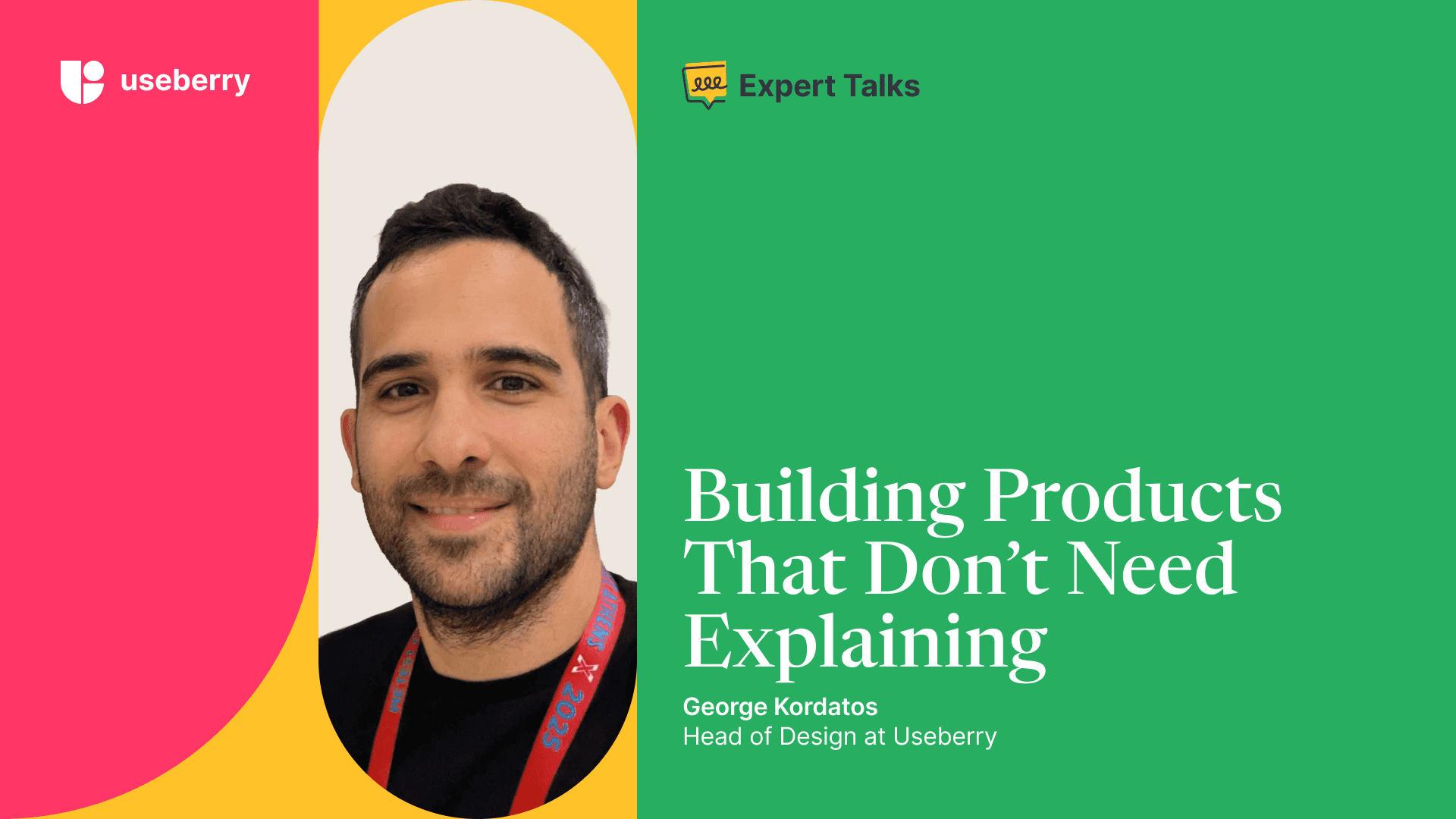
Interview with Useberry’s Head of Design, George Kordatos, on design leadership, fast feedback loops, and real user signals. He shares his experiences and advice on UX and product design with user insights.
Some teams treat UX like a final polish. George Kordatos treats it like the engine. In this internal Expert Talks interview, our Head of Design shares the path that took him from his first “this is interesting” moment at university to leading design at Useberry.
He shares how he approaches building UX that clicks, what he learned while designing big platform upgrades, and why testing early is the closest thing we have to mind reading. If you like practical design thinking with a bit of personality, you’re in the right place.
Design Journey: From First Spark to Design Leadership
What led you on the path to UX Design?
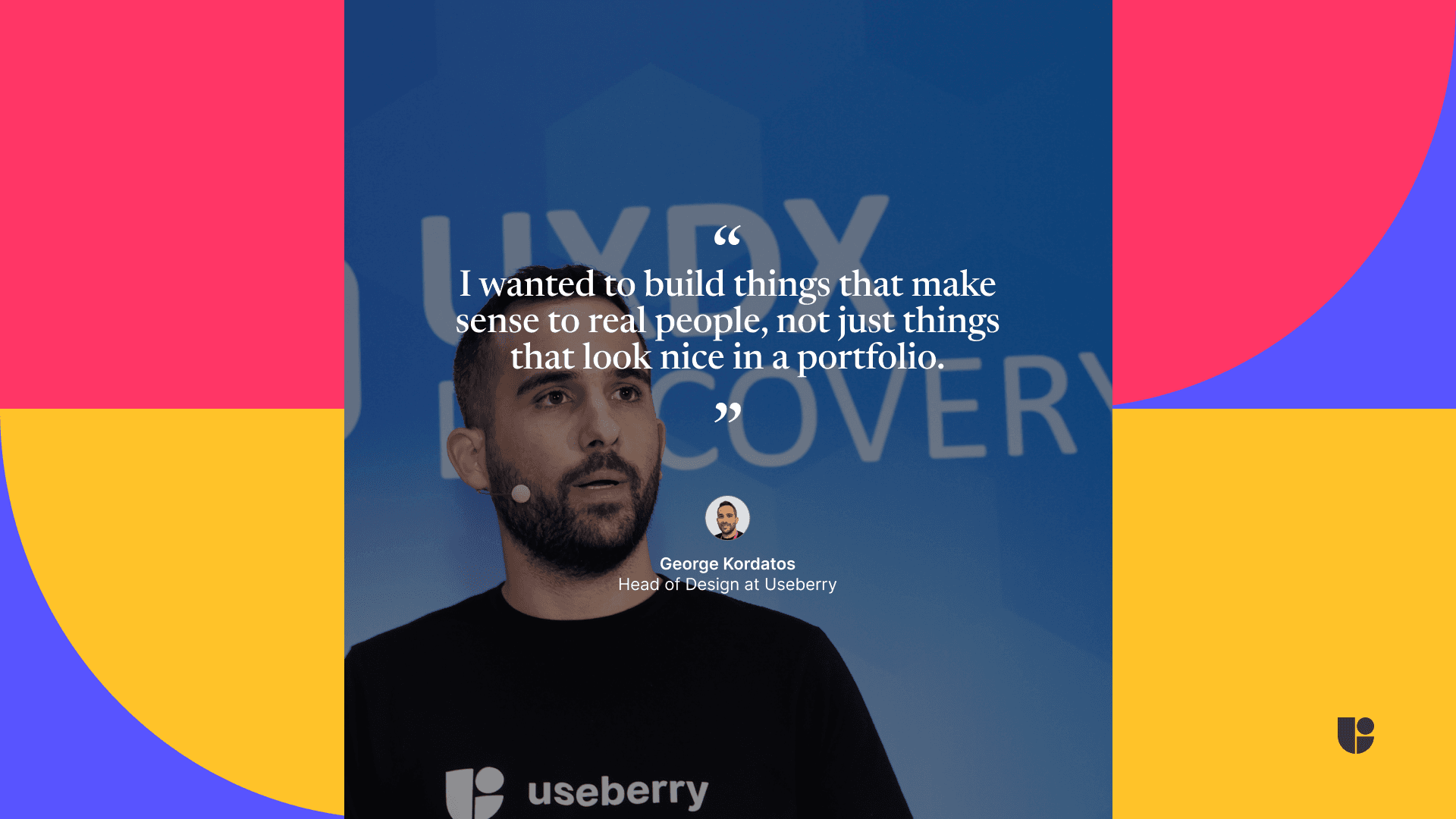
It honestly started at university, where I studied Product and Systems Design Engineering. That was my first real exposure to user-centered thinking and the kind of problem-solving that makes digital products feel simple, even when they are not. Once I saw how much impact thoughtful UX can have, I was hooked. I wanted to build things that make sense to real people, not just things that look nice in a portfolio.
What is it like to work in the tech industry, particularly in UX design?
It’s challenging in the best way. You’re building in a space that moves fast, but of course the goal stays the same, make products that offer better experiences to users. Every project comes with a fresh problem (or let’s say a puzzle), and you never really get to “set it and forget it.” You learn, you collaborate, you iterate, and if you do it right, the end result genuinely makes someone’s day easier.
What is the story behind your current role as Head of Design at Useberry? When and how did you decide to join the team?
I joined Useberry over six years ago as the first employee, starting as a UX/UI Designer. I found the role through a Greek startup community Slack channel and I was instantly excited because a company in Greece was building a product fully focused on UX research. From day one, the vision felt real, and the problem felt “worth solving”.
As the product and the team grew, my role grew with it, and eventually evolved into Head of Design. Today, we’re a small but strong crew, multiple designers and a core senior researcher, shaping the product experience and the design direction behind it.
Design Wisdom: How To Build Products That Feel Obvious
Can you share any challenging design problem you’ve faced and how you approached solving it with your team?
One of the biggest challenges was leading the design of the new recordings feature. It was one of those projects where UX complexity and technical constraints showed up at the same time, so we had to rethink core flows from scratch while still keeping scalability, performance, and reliability in mind.
The only way through was tight collaboration, lots of iterations, and constant testing. We worked closely across design, product, research, and engineering, and kept refining until things felt clear and predictable for users. The outcome was a platform experience that’s more intuitive, more powerful, and built to scale with what we want Useberry to become next.
Can you share any strategies you follow for iterating designs based on user testing and actual feedback?
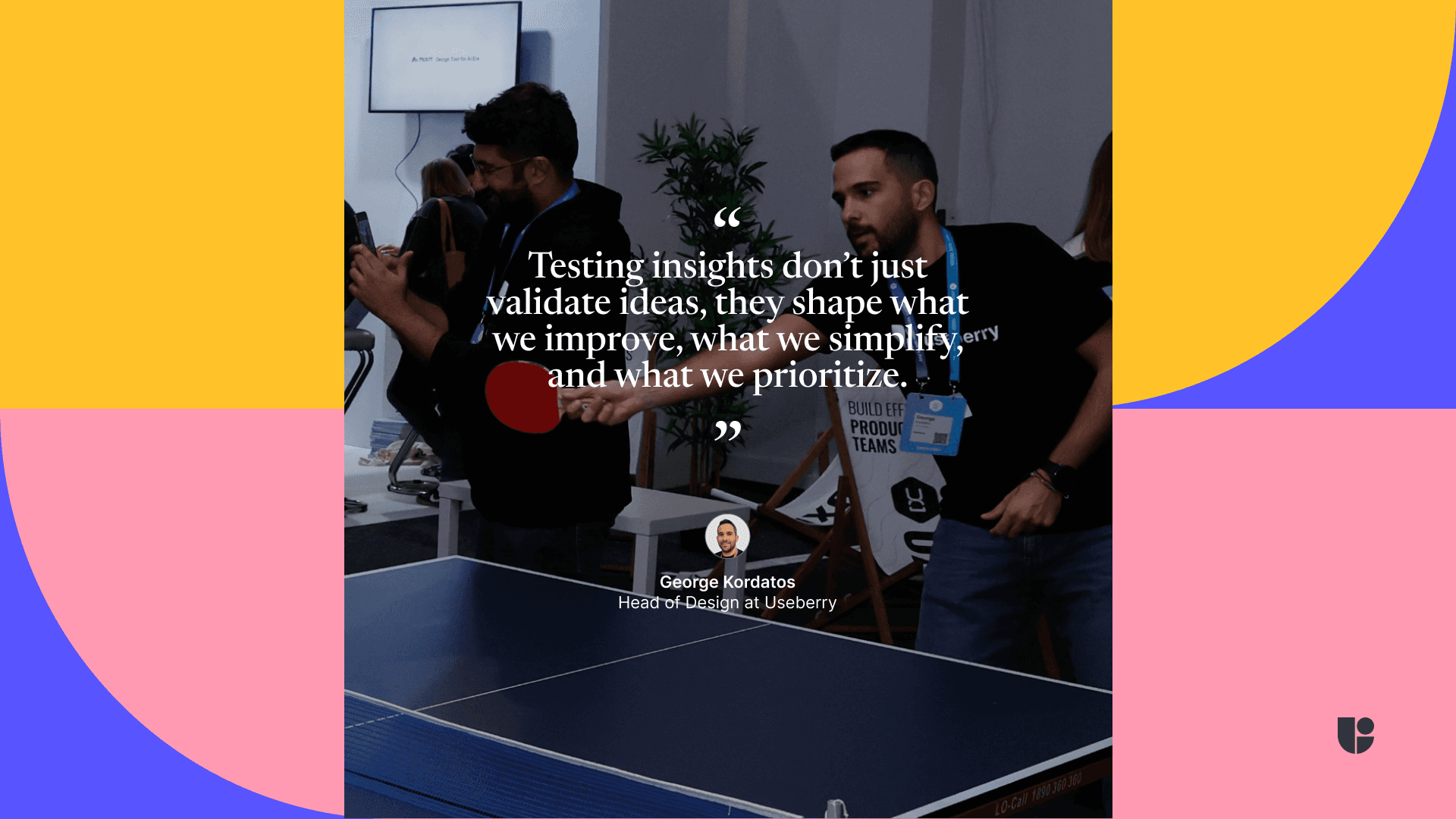
We work in short cycles and we never treat a design as “final.” The fastest way to get confident is to get real users involved early, then let the feedback guide the next step. Testing insights don’t just validate ideas, they shape what we improve, what we simplify, and what we prioritize.
That mindset helps us move quickly without guessing. It also lowers risk, because we’re not waiting until the end to find out something doesn’t work.
What advice would you give to someone who wants to become a UX designer and make an impact in the tech industry?
Read widely, not only UX books, but also psychology, product, and business. UX doesn’t live in a bubble, and the best designers understand context, trade-offs, and what “good” means for the people and the company. Also, stay curious. Inspiration comes from everywhere if you’re paying attention.
And most importantly, practice on real problems. Design, test, iterate, repeat. That’s how you build the instinct for creating meaningful, user-centered products that actually solve something.
Inside Useberry: Tools, Rituals, and What We’re Building Next
Every UX Designer has their favorite design stack. What are your favorite tools and how do you integrate them into your team’s workflow?
My core stack is Figma for design work, Framer when we’re bringing ideas closer to reality, Notion for docs and alignment, and Jira for planning and execution. It’s a simple setup, but it covers the full loop: design, document, build, ship. The key is keeping everything connected, so the team isn’t wasting time jumping between tools just to find the latest version of truth.
Can you reveal the next wow design project you’re currently working on for the Useberry platform?
Nooope. Not yet. But if I’m allowed to drop a tiny teaser, let’s just say… it will be “intelligent”. That’s all you’re getting from me for now.
What is your favorite Useberry feature, and why?
My favorite feature is our Recordings feature and all the versatile capabilities like the tags, highlights, and reels*. They turn raw sessions into something you can actually work with, not just sit and watch at length. You can spot patterns faster, pull out the moments that matter, and share insights in a way that’s clear for the whole team in easily digestible sizes.*
For me, they also represent Useberry’s next chapter. It’s not just about running tests, it’s about understanding behavior and telling the story behind what users did, why it matters and how to make the experience of communicating easier for our users.
How has your experience using the Useberry platform affected your growth as a UX designer?
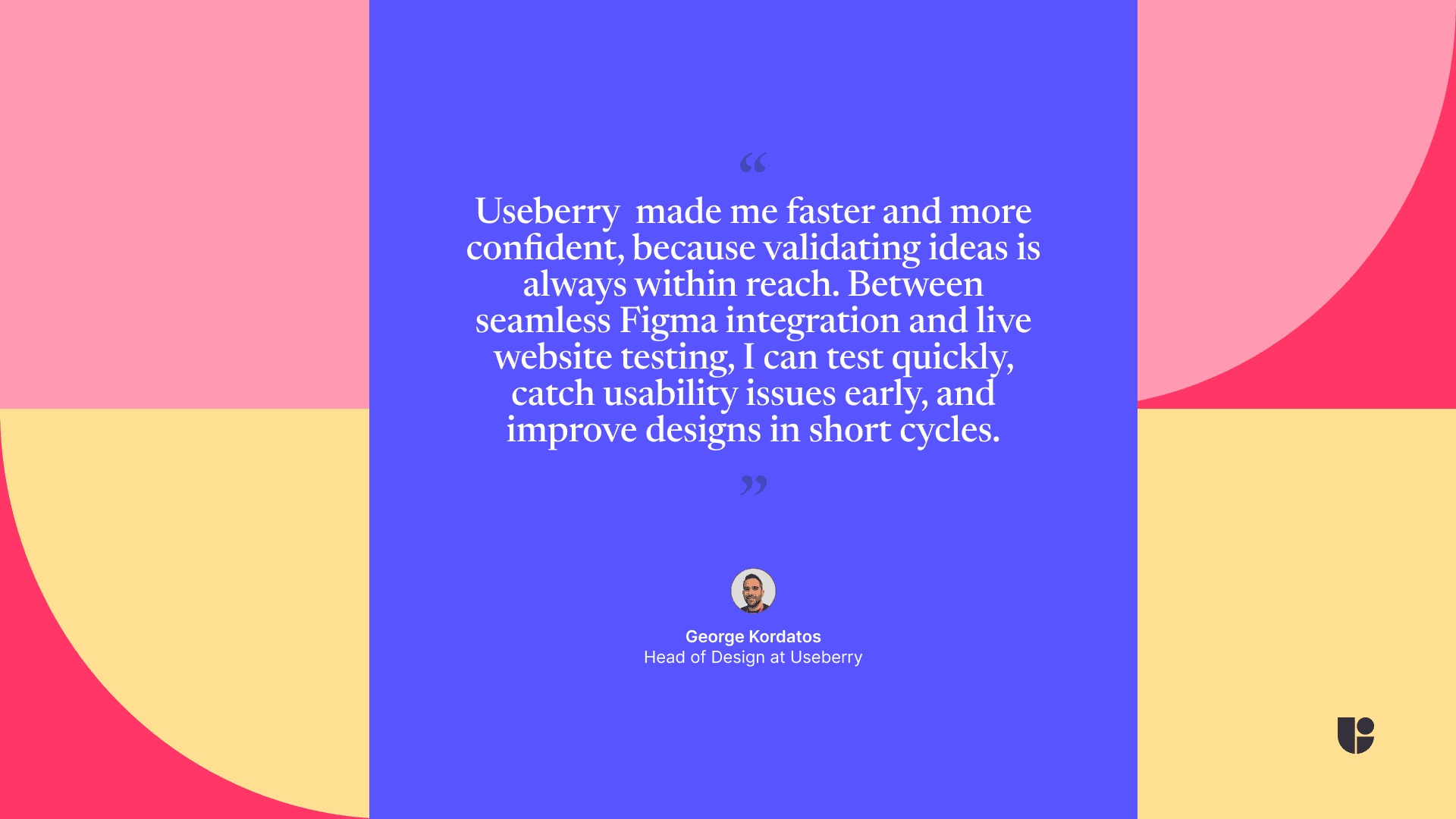
Using Useberry has made me faster and more confident, because validating ideas is always within reach. Between seamless Figma integration and live website testing, I can test quickly, catch usability issues early, and improve designs in short cycles instead of relying on assumptions.
It also pushed my UX research skills forward. When you’re constantly exposed to real user behavior, you build a stronger instinct for what works, what confuses people, and where the friction really is.
FUN Round: Quick Takes
If you could have any superpower to improve your UX design work, what would it be?
Mind reading. Easily. Imagine instantly knowing what users are thinking, where they get stuck, and what they wish a button would do. I’d find pain points faster, validate ideas in real time (and probably sleep better at night.).
No superpowers yet, but honestly, user research and testing get surprisingly close.
If you could travel back in time and redesign any product, which would it be, and what would you change?
I’d redesign Useberry’s filters to make them more intuitive, flexible, and feature-rich. Filters sound like a small thing, but they can completely shape how fast you can find signals and organize insights. If you improve that experience, you improve the entire research workflow.
It’s one of those areas where a few smart upgrades can make everything feel smoother, and yes, it’s definitely on my “to do” list.
The Wrap-up
Big thanks to George for the honest answers (and the tiny teaser that is definitely not a teaser). If there’s one theme running through this interview, it’s that great UX isn’t a single big moment, it’s lots of small decisions, validated early, improved often, and shaped by real users.
If you want to see that mindset in action, explore how teams use Useberry to test prototypes and websites, review recordings, and turn sessions into insights your whole team can actually use. And if you enjoyed this format, keep an eye out for more Expert Talks coming soon.