The Gap Between Gathering Feedback and Doing User Research
•
5 min read
Many teams think they are doing user research when they are really just collecting feedback. This article explains the gap between gathering opinions and running structured research, and why that difference leads to better product decisions.
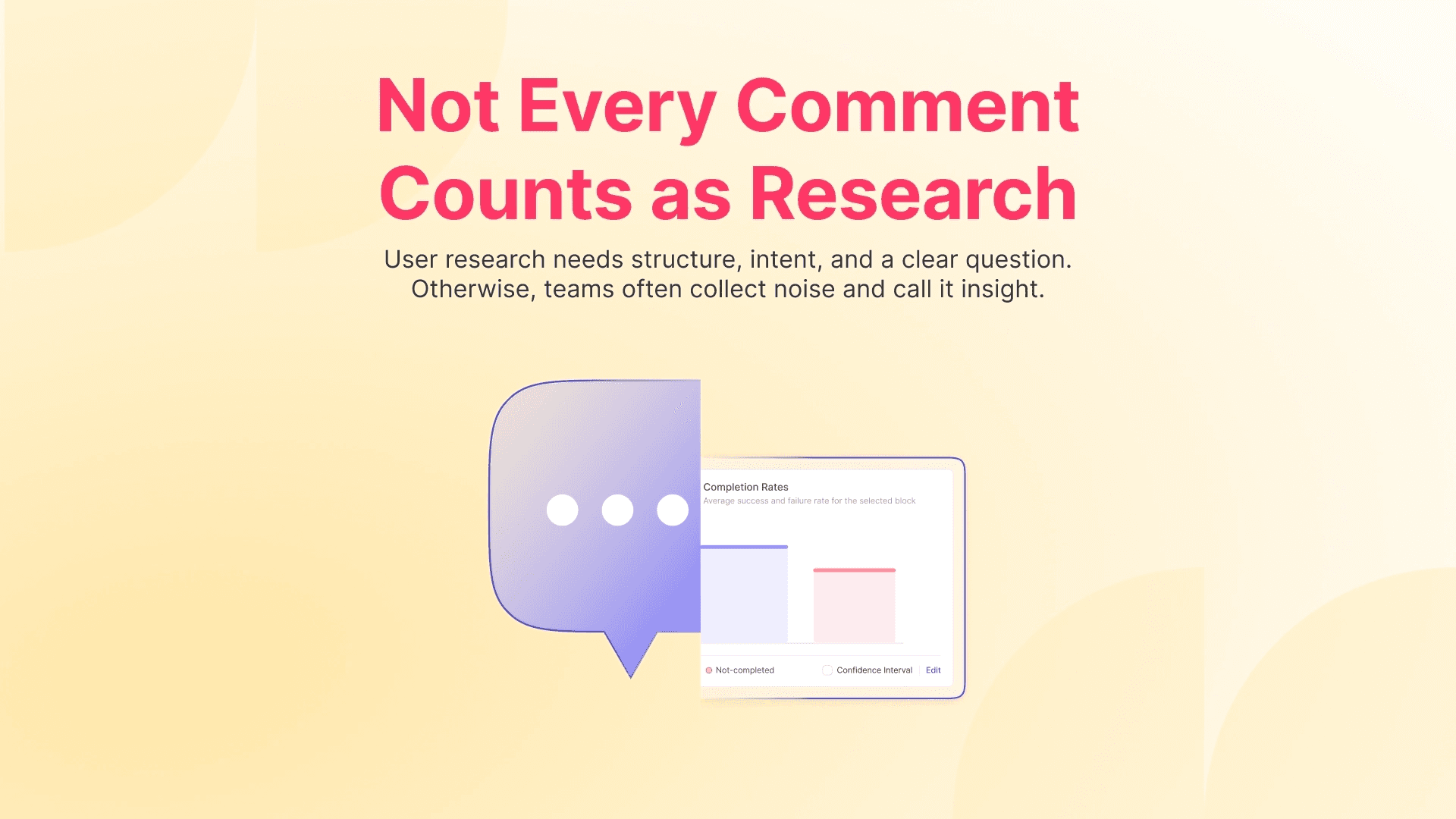
A lot of UX teams say they are “doing research” when what they really mean is that they collected some feedback. They ran a survey. They asked a few customers what they thought. They shared a design internally or got some reactions in Slack. All of that can be useful. None of it “automatically” becomes user research.
That gap matters more than you can imagine. Feedback is easy to collect but research takes more structure, more intent, and usually a little more patience (although remote user testing speed things up by a lot).In the end, that gap changes the quality of the decisions you can make afterward.
Feedback tells you what people say but doesn’t helps you understand why
Feedback is usually reactive. Someone responds to something that already exists and gives you their opinion. Sometimes that opinion is useful but it can also be vague, polite, directionless or shaped by the way the question was asked.
Research goes further. It is designed to understand behavior, context, patterns and often shaped with a specific objective in mind. It is about what they were trying to do, where they got stuck, what they expected, and why they reacted the way they did.
That is why a usability test tells you more than a comment thread. Watching someone hesitate, backtrack, or misread a label gives you the evidence you need to make decisive design decisions. The point is not that feedback is bad. The point is that feedback becomes more useful when it sits inside a research process.
A lot of “feedback” is really just unstructured opinion
Here is where teams usually start to get in trouble. Someone asks, “What do you think of this screen?” and suddenly five people are talking about colors, one person is rewriting the headline, and another is suggesting a feature that was never part of the problem. The team ends up with a lot of input and very little clarity.
Unstructured feedback tends to pull people toward surface-level comments and in different directions. It is often shaped by personal preference, job role, or how comfortable someone feels criticizing the work, etc. It can be interesting, but it rarely answers the actual product question on its own.
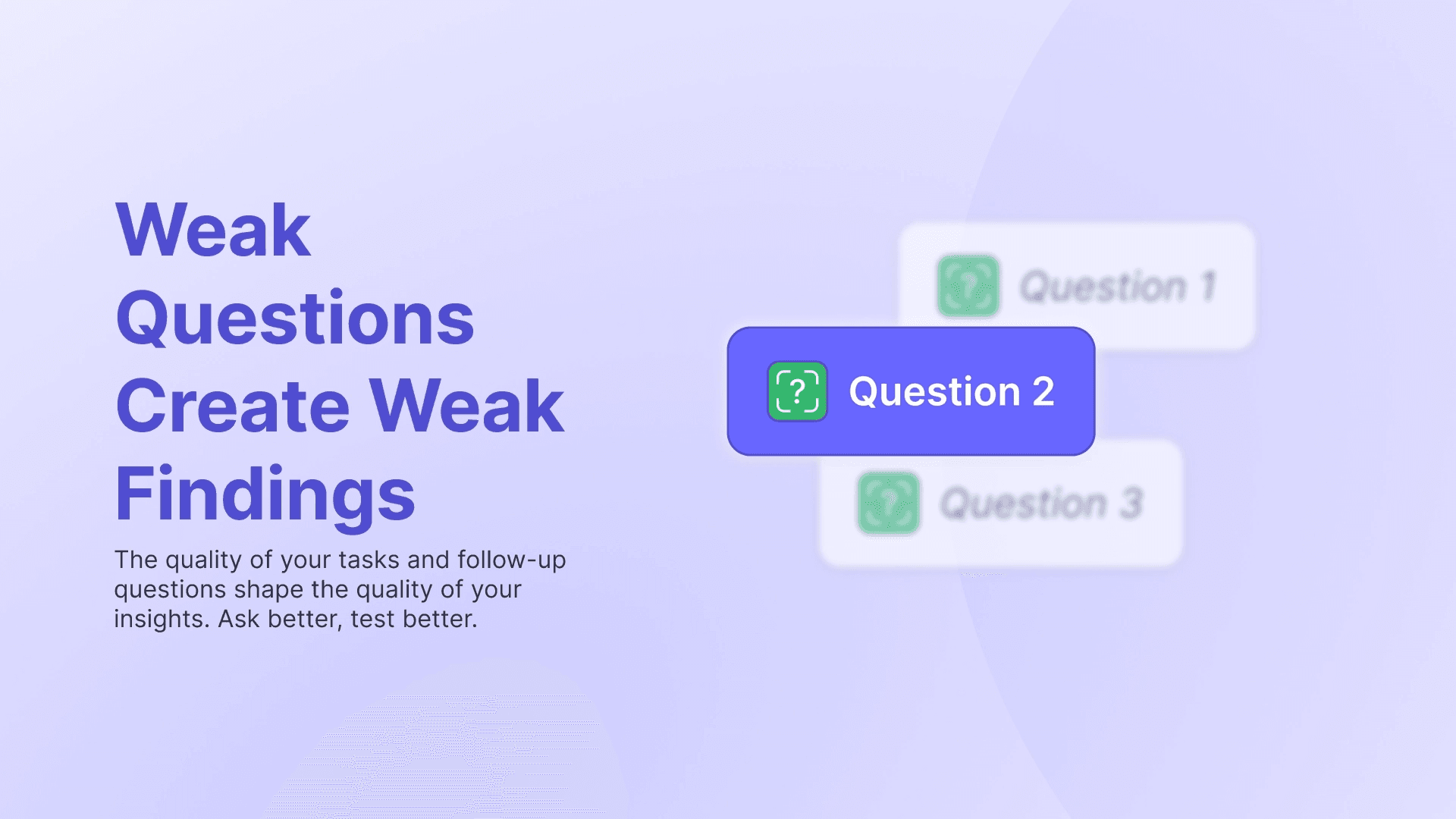
Research starts by defining that question properly, like:
Are users able to complete the task?
Do they understand where to begin?
Which label makes more sense to them?
What expectation did they have before clicking?
Once the question is clear, the method becomes clearer too. That is when a five-second test, a first click test, a prototype test, a short survey, or one of many number of research methods starts to produce something far more useful than random comments.
Good research is built before the first participant arrives
One of the easiest ways to tell whether you are collecting feedback or doing research is to look at what happened before the study began.
If there was no clear objective, no decision tied to the study, and no thought given to how results will be interpreted, you are probably collecting input rather than running research.
A short “Good research” pre-check can look like:
What are we trying to learn?
What decision will this help us make?
What method fits that question best?
What does a useful result look like?
That setup work can feel slower at the start, but it saves time later. It prevents teams from running vague studies and ending up with vague conclusions.
This is also why templates matter. A strong template does not replace research thinking, but it gives teams a better structure from the beginning. Useberry’s research templates makes it easier to get to launch without starting from a blank page.
Research looks at behavior, not just opinions
Feedback often stays at the level of what people say they think. Research is stronger when it captures what people actually do.
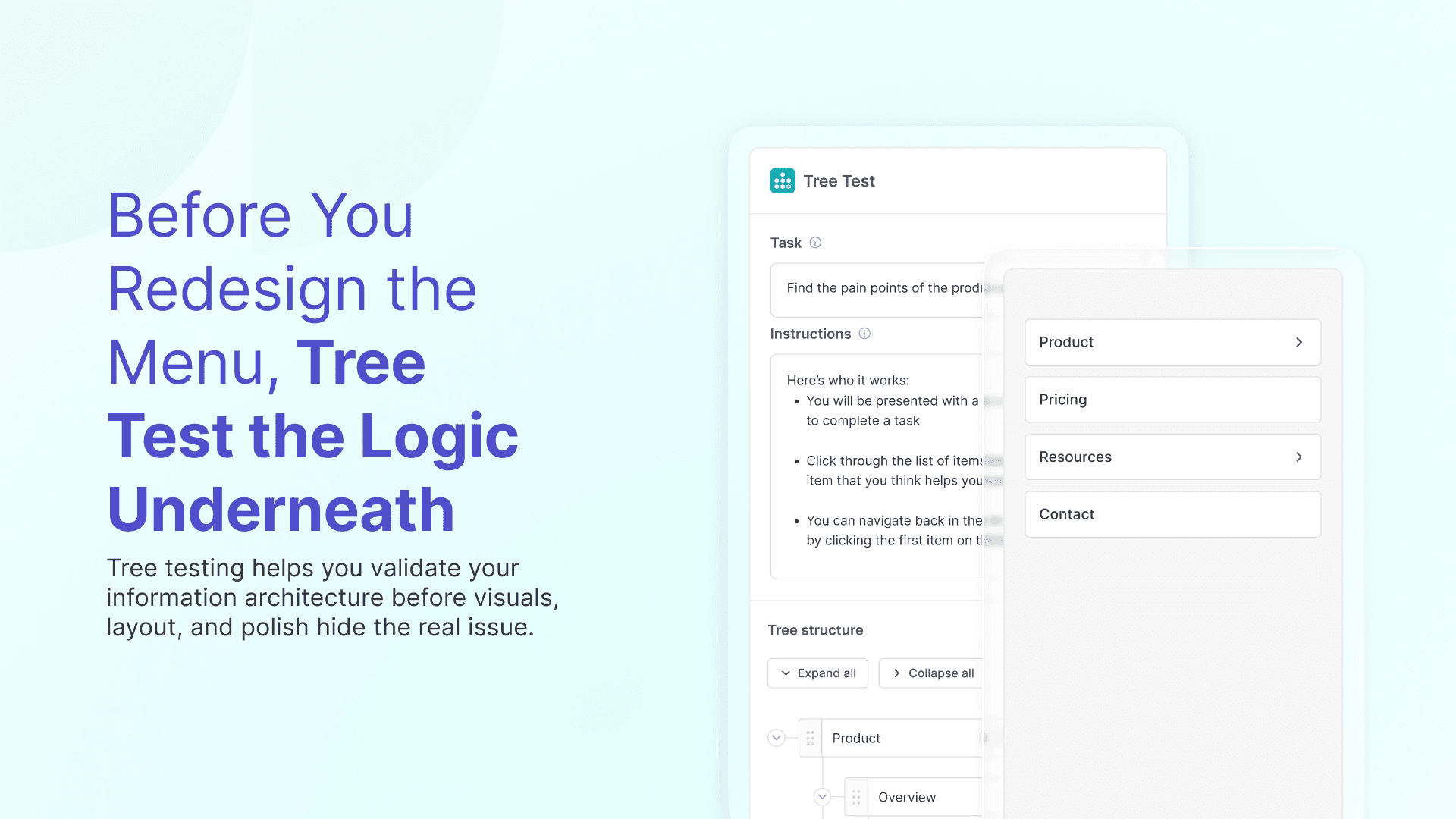
For example, if a participant says a flow felt “easy,” but the recording shows them pausing, backtracking, and hovering for ten seconds at each step, the behavior is telling you something important. If someone says a menu “makes sense,” but half the participants choose the wrong path in a tree test, the structure still needs work.
Behavior makes feedback more honest. It gives context to what people say and protects teams from overreacting to isolated comments.
Research becomes more useful when other teams can see it too
Another gap between feedback and research is decided by how easy it is to share or apply those findings.
Feedback often stays in fragments. A few comments here, a screenshot there, one person’s notes somewhere else. Research becomes much more valuable when it is easy to review, revisit, and show to others.
That is why the recent Useberry recording updates with highlight reels were very important to me. Showing a short reel of people struggling with the same thing usually does more for alignment than a paragraph explaining that they struggled.
It also helps other teams understand what is really happening. Product sees the friction. Marketing hears the language people actually use. Design sees where expectations break. Development gets a clearer sense of what needs to change. It is a lot more effective than saying we got some feedback about “onboarding being difficult”.
You do not need to choose between speed and accuracy
A lot of teams collect lightweight feedback because they assume proper research will take too long. That used to be a more realistic concern but it is much less convincing now.
Remote unmoderated testing have changed the pace of research. You can test prototypes, navigation, clicks, or tasks quickly, and still learn something specific enough to get to a real decision.
A short, well-structured study is still research. A long, messy study with unclear questions is just a bigger version of the same problem. The tradeoff is not speed versus quality. The real difference is structure versus noise.
Closing the gap is easier then you think
The good news is that most teams do not need to rebuild everything to close this gap. Usually, the shift starts with a few habits:
asking clearer questions before launching a study
choosing a method that matches the decision
looking at behavior before conclusions
making findings easy to share
using feedback as one layer of evidence, not the whole story
That is enough to move from “some feedback” to “actionable insights.”
If teams can make that shift, even in small ways, they stop collecting noise and start building understanding.