If U Seek: From On-Site Insight to Digital Impact
•
2 min read
(excluding transcript)

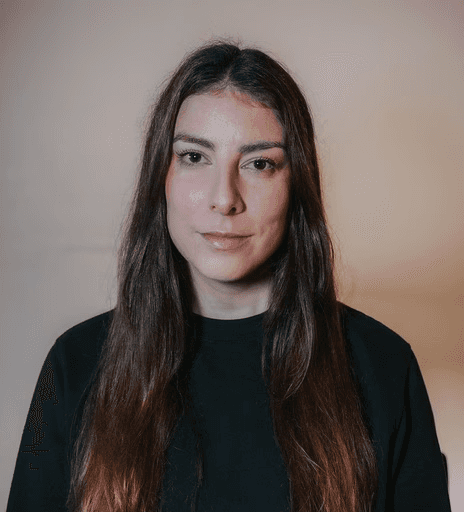
Christopher Leineweber joins If U Seek to talk about field research, design maturity, and how real-world observations add value to digital product designs.
Christopher Leineweber joins If U Seek to talk about field research, design maturity, AI fluency, and how real-world observations can lead to better digital product decisions.
Our host, Nikol Fotaki sits down with Christopher, Head of UX at RIB Software (Schneider Electric). With experience leading design at Deutsche Bank and Vanguard, alongside work with companies like Volkswagen, Christopher brings a broad perspective on UX research, product strategy, and design leadership.
From visiting people in their homes to observing how construction teams work on-site, Christopher shares how stepping into users’ environments can reveal insights that traditional interviews and digital data might miss. The conversation also explores how to turn those findings into product improvements, build design maturity across international teams, and develop AI fluency as technology continues to reshape the way teams work.
You can find If U Seek on Spotify, Apple Podcasts, or YouTube Music.
Preview
What’s in this episode:
How observing people in their own environments reveals behaviors that interviews alone might miss
What home visits and construction site research can teach us about real user needs
How on-site observations influence digital product decisions, from offline functionality to familiar design patterns
Why early UX research can reveal that a digital solution isn’t always the right answer
How combining qualitative feedback with behavioral data helps teams validate design decisions
What it takes to build design maturity and alignment across international teams
How AI fluency is influencing hiring, upskilling, and collaboration across organizations
Transcript
[00:00:00] Christopher Leineweber: So the whole AI fluency initiative is, is a global thing. It’s not just, designers. It’s really something that is spread across, all teams across the whole portfolio and product lines. The whole idea behind it is that we do not consider AI capabilities as, as a nice-to-have anymore, but it’s like a must-have for many people.
[00:00:23] Christopher Leineweber: And yes, it does influence our hiring. It does influence the upskilling for the people who are already in the team. The idea behind this is that we move from having one specific AI specialist to having teams with specialists, and everyone is becoming a specialist at some point. So there’s a certain fluency level required, and now that I have certain guidelines which I can use to assess the fluency, this is very helpful for me personally, but also for the talent acquisition team.
[00:00:59] Christopher Leineweber: So when they start to narrow down and look into the candidates, it’s simply, you know, something that’s, that helps them to guide their decision-making process.
[00:01:09] Nikol Fotaki: What we seek shapes what we build.
[00:01:12] Nikol Fotaki: This is If U Seek by Useberry.
[00:01:15] Nikol Fotaki: Hi there. Welcome back to If U Seek by Useberry. This is Nikol Fotaki, and today we’re talking about what happens when designers get out from behind their screens and meet people where they actually live and work.
[00:01:28] Nikol Fotaki: I’m joined by Chris Leinweber, head of UX at RIB Software, where he leads the unify UX collective. At RIB, he built the enterprise design team from zero to seven designers, and now leads designers across Germany, Denmark, India, and South Africa. His career spans agency and in-house design, including work on Volkswagen’s first Facebook Messenger chatbot, and projects with Commerzbank and Dr.
[00:01:55] Nikol Fotaki: Oetker, followed by design leadership roles at Deutsche Bank and Vanguard. Chris can be described as a hybrid designer, someone who can contribute to strategic conversations with senior leaders and then return to the field to conduct research or build solutions himself We’ll talk about the gap between what people say and what actually they do, building design maturity, combining qualitative and quantitative research, de- designing for people in the field, and finding meaningful uses for new technology.
[00:02:31] Nikol Fotaki: Chris, welcome to If U Seek.
[00:02:34] Christopher Leineweber: Thank you, Peppi. Very happy to be here.
[00:02:37] Nikol Fotaki: Great to have you. So let’s jump in. early in your career, you worked on Volkswagen’s first Facebook Messenger chatbot. It allowed people to chat, configure cars, and search, for used car inventory via an API within a selected radius.
[00:02:54] Nikol Fotaki: What problem were, you trying to solve, and what kind of, project, what did this project teach you and, like, about creating real value and im- you know, in these emerging technologies?
[00:03:07] Christopher Leineweber: Yeah. So, back then, and, and it’s been a while, when we were working on that, what we were trying to do is to remove, a friction point.
[00:03:17] Christopher Leineweber: So, you know, when you have people, using a specific platform or a specific product, they can stay within this ecosystem, and they can simply, stay in the conversation, the messenger that they are using day in, day out, and that was the, the whole idea behind it, so giving the users the opportunity to use something that they are used to.
[00:03:41] Christopher Leineweber: It also, gives the team the opportunity and, and the possibility to leverage a technology that already exists, right? And, yeah, so the, the whole point was the convenience. So you could chat, later on when we were, iterating and, and developing it further. There was also a possibility to configure, and last but not least, connecting it through an API with real radius.
[00:04:07] Christopher Leineweber: Yeah.
[00:04:08] Nikol Fotaki: Yeah. Very, very interesting. And, yeah, it, it’s, it’s… So these technologies, we’re seeing that kind of same excitement, around today, like with AI. And, there are so many possibilities, but, you know, the real value still comes, down to whether that technology, you know, really works, for people using it.
[00:04:30] Nikol Fotaki: And, at, at Rib now, you’ve introduced an AI fluency framework, with, defined levels. Can you explain what those levels represent and, how that framework is shaping hiring growth paths and organizational design?
[00:04:44] Christopher Leineweber: So the whole AI fluency initiative is, is a global thing. It’s not just, designers.
[00:04:51] Christopher Leineweber: It’s really something that is spread across, all teams, across the whole portfolio and product lines. The whole idea behind it is that we do not consider AI capabilities as, as a nice-to-have anymore, but it’s like a must-have for many people. And yes, it does influence our hiring, it does influence the upskilling for the people who are already in the team.
[00:05:15] Christopher Leineweber: The idea behind this is that we move from having one specific AI specialist to having teams with specialists, and everyone is becoming a specialist at some point. So there’s a certain fluency level required. And yes, I even remember A couple of weeks ago, I was, I was reviewing portfolios and, looking, looking into applications, as we’re also constantly and actively hiring.
[00:05:43] Christopher Leineweber: and now that I have certain guidelines which I can use to assess the fluency, this is very helpful for me personally, but also for the talent acquisition team. So when they start to narrow down and look into the candidates, it’s simply, you know, something that’s, that’s helps them to guide their decision-making process.
[00:06:05] Christopher Leineweber: Plus, now that we are, you know, in, in, in the time where AI is everywhere, it’s super important to not leave anyone behind. And so I mentioned the upskilling part. You know, in the introduction, you mentioned that we have, teams across the globe distributed across multiple time zones and, and, different mentalities and, and backgrounds.
[00:06:28] Christopher Leineweber: so you need to kind of foster the learning and accommodate it to, to each and every individual. So it’s not a one size fits all. it’s really something where, you know, some people are better when they have an online course. Some people prefer to have multiple day workshops. so that’s something we also need to consider.
[00:06:50] Nikol Fotaki: And, A- AI is changing so quickly. Yeah. so yeah, that ability to keep, learning, I guess may ultimately, you know, it, it may even be better than just mastering a particular or specific tools. Like, … it’s, it’s a continuous thing, so it needs, it needs these frameworks.
[00:07:11] Christopher Leineweber: Yeah. Yeah. people, people- Should also become multipliers, right?
[00:07:17] Christopher Leineweber: So, what’s- what I have also recently introduced is, like, a weekly session where we have a show and tell, so people- … can also show what they were exploring and, and then trying out, specific skills that they created, some agentic workflows. And, yeah, the, the more they play around with it, the more we can also learn in terms of, the boundaries.
[00:07:41] Christopher Leineweber: At least the current boundaries, right? We never know what comes next.
[00:07:46] Nikol Fotaki: Yeah. Exactly. Exactly. And, so also these new capabilities only become meaningful when also the culture around them allows people to use them, well, as you also explained, like to have these sessions. so building a design team is one thing.
[00:08:05] Nikol Fotaki: building design maturity across an international organization is, another. What does design maturity actually look like to you, and how do you develop it when teams, you know, bring different cultures, experience levels, and ways of working?
[00:08:21] Christopher Leineweber: So let me first start with, how I would dis- define, design maturity.
[00:08:27] Christopher Leineweber: So for me, design maturity does not mean pure headcount or the number of processes, the workflows. It’s, it’s not about that. for me, design maturity is something that I can spot immediately when, designers are independent enough to, to make design decisions. So, you know, it’s, something that I also want to foster in, in, in our team, is that- There’s no need for me to intervene all the time.
[00:09:04] Nikol Fotaki: Yeah.
[00:09:04] Christopher Leineweber: So it’s something where people can, own quality, they, they can judge across their teams, and there’s no need for me to be everywhere. It’s actually impossible. Yeah. So therefore I need to foster this culture of, you know, giving everyone, the, the same foundation so they can actually, you know, they get access to the same tools, they get access to the same, panels, recruiting panels, they get access to the budgets.
[00:09:35] Christopher Leineweber: so this is something that, that you have to foster and, it is also necessary to, you know, when we talk about the actual design, to have a look at, consistency and alignment obviously in terms of design systems, up to specific principles and everything that, you know, when you look at it as, as if it would be a pyramid, up to the design vision.
[00:09:59] Christopher Leineweber: And so all of that is, is part of this structure. And, yeah, it’s, it’s something that I have an, an eye on, and design maturity for me means that you have this pyramid and, even though, you know, sometimes there’s a brick missing, it, it’s still, it’s, it’s there, right? It’s, it has a foundation.
[00:10:19] Nikol Fotaki: Yeah. it kind of seems like, it’s, less about how polished, I guess, the design function looks like and, more about how you and the organization, you know, make decisions and how you structure.
[00:10:32] Nikol Fotaki: Yeah. And, so how, how do you decide which standards and practices should be shared across every team, and, like, where to allow local flexibility?
[00:10:45] Christopher Leineweber: so there are- Specific things that have to be aligned across multiple countries and even across different software products that we have. so I mentioned the design system.
[00:10:58] Christopher Leineweber: Even though there might be some theming included, but still it’s one brand, it’s one communication, no matter if it’s the German market or UK or Australia. if you have someone very specific, like an estimator in construction, they do estimates, right? It’s something where, you know, when you have design elements like a table, or even the navigation, what we’re trying to do is to share the knowhow and the patterns, across the globe.
[00:11:30] Christopher Leineweber: But when it comes to local aspects, I can even name an example. so what we’re trying to do is obviously we have to accommodate the time zone, differences. It’s something where we even rescheduled our calendars completely in terms of, you know, to, to accommodate when the local team is going to lunch.
[00:11:53] Christopher Leineweber: Because- Mm … the local team has a very specific time. You know, sometimes- Yeah … in Europe you have teams, they’re like, “Oh, I’m gonna have lunch at 2:00 or 3:00 PM.” But, then there are also teams where it’s, you know, really prepared for them. They have a canteen. They go there at a specific time, and if they miss it, they miss lunch completely.
[00:12:11] Christopher Leineweber: So these are local aspects you need to, keep in mind and, create also a certain ability and, and empathy, right, f- in, within the team that they have to understand, look, there are some rituals, they’re used to it locally, and we have to respect them.
[00:12:27] Christopher Leineweber: so it’s a, it’s a day-to-day thing and it has, literally nothing to do with the design system, but it’s really more about the how do people work, in different time zones, how does their commute look like, that kind of stuff.
[00:12:40] Nikol Fotaki: Yeah. So important. and, and, and has leading across, you know, all these multiple product lines changed the way you approach design leadership?
[00:12:50] Christopher Leineweber: I would say that my approach to design leadership hasn’t changed so much because- When it comes to my values, I try to, you know, take them with me no matter which-
[00:13:07] Christopher Leineweber: team I’m, I’m working in, and no matter which, country I’m, I’m w- collaborating with. I guess there’s a certain add-on, like a, like a complexity that, that I’m facing right now, which is also for me a very interesting challenge. It’s, the fact that we’re also, embedding a lot of AI for users. So it’s really about making software AI native for the people who are, using the software.
[00:13:36] Christopher Leineweber: And this is something that is also in the design discipline. You know, you have best practice, you have things you can look at, you can benchmark against competitors. but then there’s so much stuff that has not yet been explored, and there’s a lot of UX research going on, from our side. So, it’s also, something that I want to really build and establish in, you know, in my new role-
[00:14:02] Christopher Leineweber: is to have a dedicated UX researcher focusing and then really owning that sphere. In terms of tools, we are pretty much set. and we are very happy with what we’re using, including Useberry. I would say that it’s more about having someone who’s also orchestrating it. So yes, I mentioned that each individual should be able to do some testing.
[00:14:27] Christopher Leineweber: They have to be independent. But, Yeah … a certain level of ownership, someone who is facilitating it, for example, best practice, research plan. And, I think this is something that, has to sit within, you know, the, the range of one person and, and not, you know, everyone, contributing to it is fine, but there has to be a decision taker.
[00:14:51] Christopher Leineweber: Yeah.
[00:14:51] Nikol Fotaki: All right. Real quick before we jump back in. You know how product teams are always trying to move faster, and research teams are trying to move smarter? Well, Useberry actually helps you do both. It lets you run quick remote user tests, and honestly, they’re just as easy to run as they are to share.
[00:15:11] Nikol Fotaki: No bottlenecks, no endless waiting around, and definitely no more guessing. It’s just research that moves at the speed of product.
[00:15:19] Christopher Leineweber: Check it out at Useberry.com.
[00:15:25] Nikol Fotaki: Much of design maturity seems connected to how well an organization understands the reality of its users also. and y- y- you went a bit towards the users now, so that’s a great, way to, to jump into, this, th- this, this, company that at one point you were asked to help turn a completely analog service into its first digital product.
[00:15:49] Nikol Fotaki: Yeah. And so w- with no existing interface or usage data to build from, where do you even begin?
[00:15:57] Christopher Leineweber: yeah, I think, you, you already mentioned it. you begin with the users, and, if you don’t have any digital touchpoint yet, what you could do, and this is also what we did, is you start to discover and explore.
[00:16:12] Christopher Leineweber: So you go into the discovery phase, and you do a lot of research. And the way I approached it, and I’m still approaching it, is, well, then let’s find out who these people are, what are their pain points, and then later on we can decide on how we solve them. Maybe it’s digital, maybe it’s not. But, no matter what you find out, during that research phase, helpful for the decision-making process, roadmaps.
[00:16:41] Christopher Leineweber: Even in my case, the things we found an impact on market the product, so also did, did some tweaks and had the chance to, save some money on, on, on the targeting because we were able to target better based on the UX research. So it was not necessarily a dedicated marketing it was that, gathered some and based on that, we were able to tweak
[00:17:04] Christopher Leineweber: But yeah, it doesn’t have to be necessarily something digital. That’s what I am trying express. every insight is valuable And yeah, once you have the personas, once you, you know what the real deal is, what they need-
[00:17:19] Nikol Fotaki: …
[00:17:19] Christopher Leineweber: you can think about potential solutions.
[00:17:22] Nikol Fotaki: Yeah. Y- you had a lot of open space, I guess, also.
[00:17:25] Nikol Fotaki: I- i- like, with these, n- with nothing. So you, you had to go all in and try to find it yourself. but these also those early research decisions, I think much more significant, how it played out, the whole product at the end of the day.
[00:17:42] Christopher Leineweber: Yeah. Even if, it turns out that there’s, no new product in that field, it is- Yeah
[00:17:47] Christopher Leineweber: a very valuable insight, right? Because-
[00:17:49] Nikol Fotaki: Exactly …
[00:17:50] Christopher Leineweber: it means that you saved from investing a lot of money into something that is not necessary, or-
[00:17:56] Nikol Fotaki: …
[00:17:56] Christopher Leineweber: it’s something that, you could have covered with another solution.
[00:18:00] Nikol Fotaki: And that research, this is so interesting to me, and I want you to tell our audience all about it.
[00:18:06] Nikol Fotaki: that research also took you inside people’s homes. Yeah. So, can you take us into one of those visits and tell us what happened the healthy eaters opened their fridges?
[00:18:21] Christopher Leineweber: Sure. yeah, that’s, that’s a really good story because it’s, is a great indicator on different research approaches. I remember was, you know, part of the research plan to visit, the homes of some people to, yeah, have a look at, which products they how do they store specific and what are the challenges.
[00:18:46] Christopher Leineweber: And yeah, the story that you just mentioned with, the healthy eaters, we were really looking into finding also, the vision was to find something that is sustainable and, maybe leaning towards a healthier lifestyle. And of course, one of the aspects was to understand what mean for people.
[00:19:10] Christopher Leineweber: And, yeah, we were talking a lot about that, and there was this one, particular person in visit you just mentioned, where we were talking about, the healthy lifestyle, and the person said, “Well, relatively healthy because I cook at Which makes sense. So they cook at home, it’s something that they do, regularly, in their mind, cooking at home healthy.
[00:19:32] Christopher Leineweber: And then we realized once we fridge that everything that they were in the fridge, was microwave. So their perception of food was, well, it’s at home, it’s something that I open and I put into the microwave, so that’s healthy. And it’s something that you would never, ever know if, you would just have a conversation, without visiting the person.
[00:20:02] Christopher Leineweber: To be honest, I mean, this is a fun story, but in general, I also did, home visits in the fintech context, other projects as well. a very special moment, right? Because you visit someone in their private space and, it’s not always fun, I can tell you that- Yeah … it can be exhausting. It can be, also very personal.
[00:20:23] Christopher Leineweber: So you have to- … kind of try to keep your personal judgment out of the way. So-
[00:20:30] Nikol Fotaki: Yeah …
[00:20:30] Christopher Leineweber: each individual is different, right? different, furniture, different priorities, different lifestyle. And when you do the research and you visit someone, you have to be absolutely neutral.
[00:20:42] Nikol Fotaki: Huh. Yeah. So interesting. And I, I guess this also…
[00:20:47] Nikol Fotaki: It really captures how someone’s surroundings can tell another part of the story that, you know, may never come up in a conversation- Yeah … over, let’s say, a, a remote interview or something like that. And also, from, from this research, can you one observation, from home visit through to a digital feature or touchpoint the team created after this?
[00:21:13] Christopher Leineweber: I think as a, as an example, something that is, very recent, a recent experience that I can share. What we’re also visiting construction sites. So we are in very good relationships large construction companies, but even the smaller ones, so very big network that we have.
[00:21:31] Christopher Leineweber: we want to involve the, the customers, and then in the end, also their users, into the development process of our software, what we’re doing occasionally is visiting them and, yeah, it’s… The range is quite, quite big. So it can go from a simple observation Up to really visiting on a very specific day when, there are a lot of, machines and cranes on the construction site, and, and they have to do a very specific action, right?
[00:22:04] Christopher Leineweber: So it can be just observing a random day, or it can be something specific. Yeah. As, many of, our probably know, so in Germany there’s quite some stuff that is, still analog, paperwork and, and- Ah … especially in construction, there are things that kept in, in folders and, and people are still using a lot of software that is quite static.
[00:22:29] Christopher Leineweber: So with static, I mean that there’s, you know, you put some, data into a document, you send it via email, and then- The person responds, ping pong. The file could be, you know, already, outdated. So these kind of things, they happen.
[00:22:46] Nikol Fotaki: Yeah.
[00:22:46] Christopher Leineweber: And, especially when you, when you visit a construction you see that it’s stressful, it’s busy, there are…
[00:22:55] Christopher Leineweber: It’s noisy. they have large machines. And, sometimes there’s no internet. there might be construction sites with people, for we’re also offering an app or multiple services through an app, and you have to know that there are construction sites with people who are not, German speakers.
[00:23:14] Christopher Leineweber: they might be from countries, you know, close to Germany, for example, Poland, and then you have to keep in mind the localization. These are things that, in theory, you can find out through desk But once you are there, you generate the real insights because, yeah, it’s something that you cannot replace.
[00:23:33] Nikol Fotaki: Yeah, and, so this field work that is, cons- construction sites, as you, you mentioned, when people are, you know, using all these digital products while moving handling equipment- Yeah … bigger, machineries that you mentioned, conditions, how do you research the complete experience, rather than only the screen?
[00:23:56] Christopher Leineweber: It depends on the actual persona. definitely a split in construction between white collar workers and blue collar workers. So there are definitely people who are in the office day in, day out. They use the software to do some estimates. They, uh, use it for some procurement, processes. Um, so that’s something that you can track really well through the digital touch point.
[00:24:25] Christopher Leineweber: So there’s, there’s software that we can, we can use for data analytics to look into that. Uh, and it’s- Simply data point, right? So you can, uh, track everything that is happening in the software. In parallel, you site visits, and then you can also, um, test, uh, yeah, by having a focus group. So that’s also something that I think is exciting.
[00:24:54] Christopher Leineweber: Um, we have, like, focus groups with, uh, customers who are willing to go the extra mile. So with- mile, I mean that they’re happy to join, uh, workshops with us, where we ideate together. They, they bring, uh, challenges from their, from their construction work, and then together with, uh, product managers and the designers, uh, we are, uh, creating mock-ups, and then test them immediately because the people are already there.
[00:25:23] Christopher Leineweber: Yeah, that’s, that’s, that’s like a, user and customer advisory board. Yeah.
[00:25:29] Nikol Fotaki: Mm-hmm. Yeah. And so many things screen, uh, whether the digital experience will actually work and work Can you take us into one you know, sites you visited and an a observation that changed the digital product?
[00:25:45] Christopher Leineweber: Uh, yeah. I think, uh, there are so many things that by I mean, this simple one. We visited a construction site in and, uh, it was one of, uh, conceptual sustainable supermarkets from a German chain. And what I saw was, well, they’re using tablets, okay?
[00:26:06] Christopher Leineweber: Yeah. It’s just a mobile phone. It uh, responsive and adapt to the, to the size And apart from that, and that was quite interesting, which had an influence on our going forward to and the roadmap, is, um, the offline mode, right? So there’s, there are situations where a construction site might be very uh, in, in the, in the underground.
[00:26:31] Christopher Leineweber: You don’t have connection. for example, having, um, geofencing, right? This is also quite an interesting technology for tracking of the people on the construction site. So that you enter the geofence, and we start to track that, okay, this person with, uh, this particular machine, car, has arrived.
[00:26:58] Christopher Leineweber: And then they are on the construction site, and they might lose the connection. But then we, we try to, to ping and um, update as soon as possible and, and, and, uh, technically feasible. So yeah, this is example. But really there’s, there’s so much to it, um, that has decision-making. Or maybe another one, um, you know, on construction sites, um, people might print their, uh, their plans.
[00:27:32] Nikol Fotaki: Okay.
[00:27:32] Christopher Leineweber: And, um, I remember we had, uh, we had visited them and, uh, they had this huge plan with, uh, color-coded pins. Mm-hmm. Physical you put into the, into the board.
[00:27:45] Nikol Fotaki: Okay.
[00:27:46] Christopher Leineweber: And we, we asked them like, “Oh, what are you using this color for?” And then they told us the whole color-coding logic. Uh, and everyone construction site knows the color codes.
[00:27:56] Christopher Leineweber: And, then what we did we applied the color codes to this particular mapping. And, uh, so I would say that it’s just, uh, mind-blowing how much you can actually find step- Wow … into the and into the, into the industry.
[00:28:12] Nikol Fotaki: A- a- and I think it really expands the meaning usability, you know?
[00:28:17] Nikol Fotaki: Yeah. Actually seeing need and how they need it. Um, so a field can something important. Uh, I’d love to look at how you build on that kind of insight and turn it into evidence, uh, the team can use.
[00:28:32] Christopher Leineweber: Mm-hmm.
[00:28:32] Nikol Fotaki: So when you joined IRB, a qualitative UX audit had already, uh, identified opportunities to improve the product.
[00:28:42] Nikol Fotaki: Um, but it didn’t show how widespread or significant, uh, each was. How did you turn broad findings into questions the team could actually test and act on?
[00:28:54] Christopher Leineweber: once we had the data from this large UX audit- We use that, uh, to prioritize the issues. So that were particular blockers and would essentially, um, not allow users proceed with a specific action, obviously this was tackled first.
[00:29:18] Christopher Leineweber: But then well, now you have, the, the medium topics, uh, so which one do start with? And I think that also in our company, doing a great job in terms of, you know, gathering this data through various touch points. One is customer support. So customer support, um, is lot in terms of identifying what we could improve, because they are very close who are using the software other thing is, you know, for example, I have, uh, never worked in the construction industry before joining RIB, but we have people in the company, subject experts, who have not just studied architecture or they were engineers on a construction site.
[00:30:04] Christopher Leineweber: Uh, there are people who spent their whole life construction. Mm. um, they are very, very helpful to prioritizing specific things, when it comes to also helping us to, to make and some decisions. So what we, uh, recently did, um, it’s also an interesting initiative, we evaluated and, because we had sufficient feedback to do some improvements in the, uh, information architecture.
[00:30:35] Christopher Leineweber: What we did is we actually, uh, did testing through, uh, Useberry. we did the testing and had a look at the data and evaluated based on the data with, uh, specifically the maps were very helpful to see, okay, how does it turn out? And then we were testing it against the of information
[00:30:57] Christopher Leineweber: So we had- Mm-hmm … the older version, newer version, and then we looked into the data and, and made the decision to continue our efforts with the new information architecture.
[00:31:08] Nikol Fotaki: um, how did combine, say, the behavioral insights that, Useberry provided, like with the heat maps? Um, yeah, a- and what, participants shared in interviews.
[00:31:22] Nikol Fotaki: Did it give you a more complete understanding?
[00:31:25] Christopher Leineweber: Yeah, it’s, uh, especially the because we were, uh, not just looking into the paths and, um, the heat maps, but we were also collecting feedback. So we had a feedback form. We also, uh, did recordings of the sessions, so there was who was obviously guiding the person through the, through the test, and then there’s an observer.
[00:31:51] Christopher Leineweber: And, um, we, we collected in terms of data, evaluated with… So currently at RIB is, uh, Dovetail. And I that when it comes to AI, it’s about, you know, us building AI for the users, but it’s also looking into how we can leverage to help the To evaluate synthesize the data.
[00:32:15] Christopher Leineweber: Because as you might know, um, and this is something that I will encounter in the upcoming weeks, is I will have a lot interviews again with, with, uh, people who are in and looking into the latest updates, latest features that we have.
[00:32:31] Nikol Fotaki: Mm-hmm.
[00:32:31] Christopher Leineweber: yeah, each conversation you need to digest, you need to look into all and this process takes way more time than the conversation itself.
[00:32:43] Nikol Fotaki: So the m- the more you can speed up and then create efficiency around that, the, the happier the team is and the better the result.
[00:32:51] Nikol Fotaki: And, um, is there an example that you could share where the changed or challenged the product decision?
[00:32:57] Christopher Leineweber: Yeah, absolutely. Um, the research has um, several
[00:33:04] Christopher Leineweber: very specific, is how you view documents. So, you know, typically you have, you can have a list you can have a grid view, and sometimes you even preview, a teaser, um, of the document or of the photo took from the construction site. So there’s a lot of, a lot of documentation that you’re doing on the construction site.
[00:33:25] Christopher Leineweber: So you’re taking you are adding comments. You can also assign specific tasks and actions with the photo combined. We received a feedback that, the beginning, the, in the prototype, we did not have, a proper preview. It was very small. And, uh, direct feedback was, look, um, the user to click through every single image you know, then close it again.
[00:33:49] Christopher Leineweber: It’s gonna be 10 or 20 clicks. I want a proper preview so I can, you know, really have a, a decent ratio to see what has been photographed or to at least see the of the document.” legal document? Is it, uh, like a contract or some, a material list? Um, so yeah, very feedback and, uh, yeah, something that we, we’re using to improve the product.
[00:34:14] Nikol Fotaki: Hmm. Yeah. And i- i- so it didn’t just, uh, support the decision, let’s say. It kind of created, uh, the space also for the team to actually consider it, uh-
[00:34:27] Christopher Leineweber: Yeah …
[00:34:27] Nikol Fotaki: there to be a common uh, across all these stories, uh, which is getting closer to reality and being open- Mm-hmm … to reveals.
[00:34:39] Christopher Leineweber: Yes.
[00:34:40] Nikol Fotaki: Yeah.
[00:34:40] Christopher Leineweber: For sure.
[00:34:41] Nikol Fotaki: Uh, Chris, thank you so much. Uh, this was such a fun really, you know, enjoyed hearing about your how they’ve actually shaped the way you design and research. Thanks so much.
[00:34:54] Christopher Leineweber: Um, thanks invite, for giving me the opportunity to, you know, share, share some insights and, uh, just, bring a bit more, yeah, engagement into the community to let the people exchange with users and customers.
[00:35:09] Nikol Fotaki: so we’ll include links to, Chris’s work and social profiles in notes, so be sure to check those And thanks to everyone listening to If U Seek by Useberry. See you next time.
[00:35:23] Nikol Fotaki: For more exciting content, on our social Your reviews mean the world forget to leave one. And of course, hit that subscribe button to stay updated on our latest episodes. If U Seek as a platform for discussions personal insights, the opinions presented by guests independent and do not represent the official position of the host, Useberry, or our sponsors.

